LCDP Cross-Domain Solution
Building a comprehensive customer data platform to integrate online and offline data, enabling precise marketing automation.
Timeline
Sep 2023 – Feb 2025
My Role
Main Product Designer
Platform
Web
— Project Overview —
01 | Objective
Designed an OMO-driven CDP to help brands build a full customer view and enable data-driven, targeted marketing for better conversion and growth.
02 | My Role
Led user flow, IA, interface design as a main product designer. Collaborated cross-functionally to launch the MVP, defining product vision and core features from the ground up.
03 | Challenges
Built a secure, user-friendly CDP in 6 months. The key challenge was balancing technical complexity with ease of use for non-technical users.
04 | Outcome
Defined a differentiated product position, launched the MVP with internal validation. Built a modular UI system to enhance consistency and development efficiency.
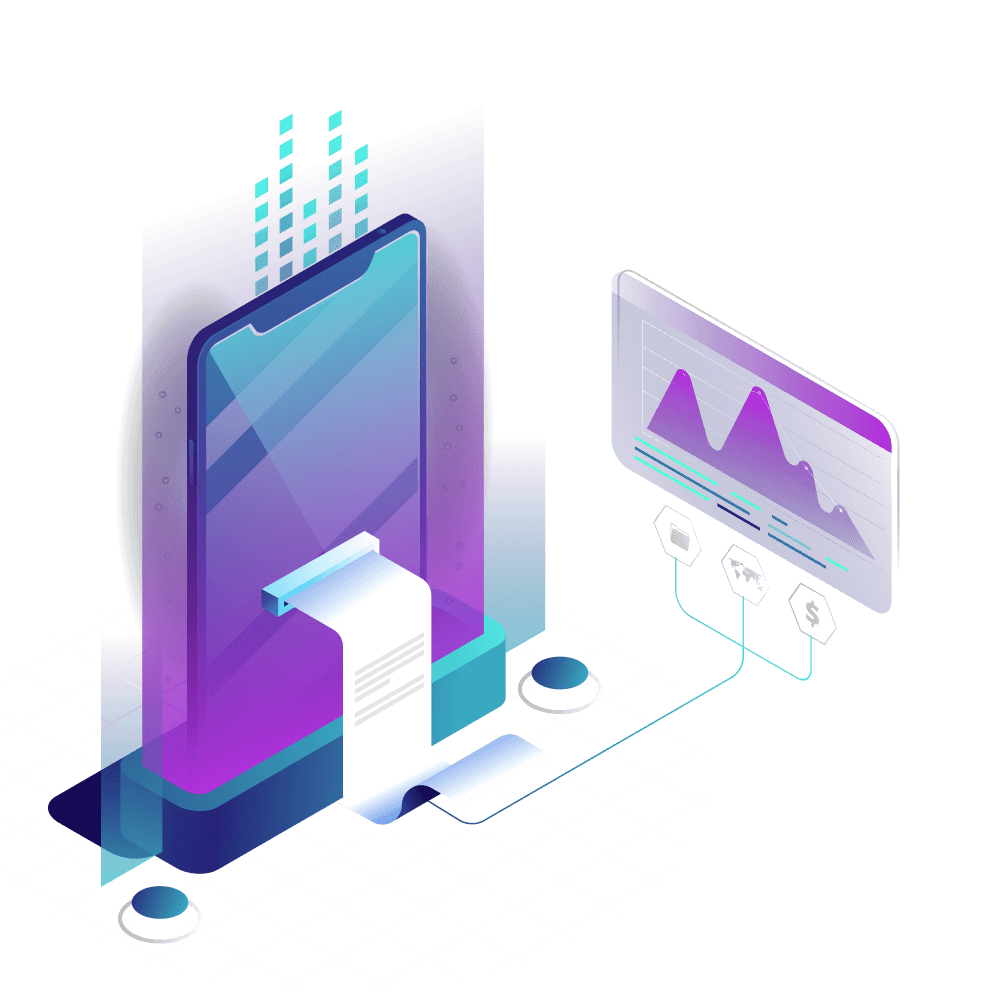
01 | Rising Demand for Real-Time Analytics
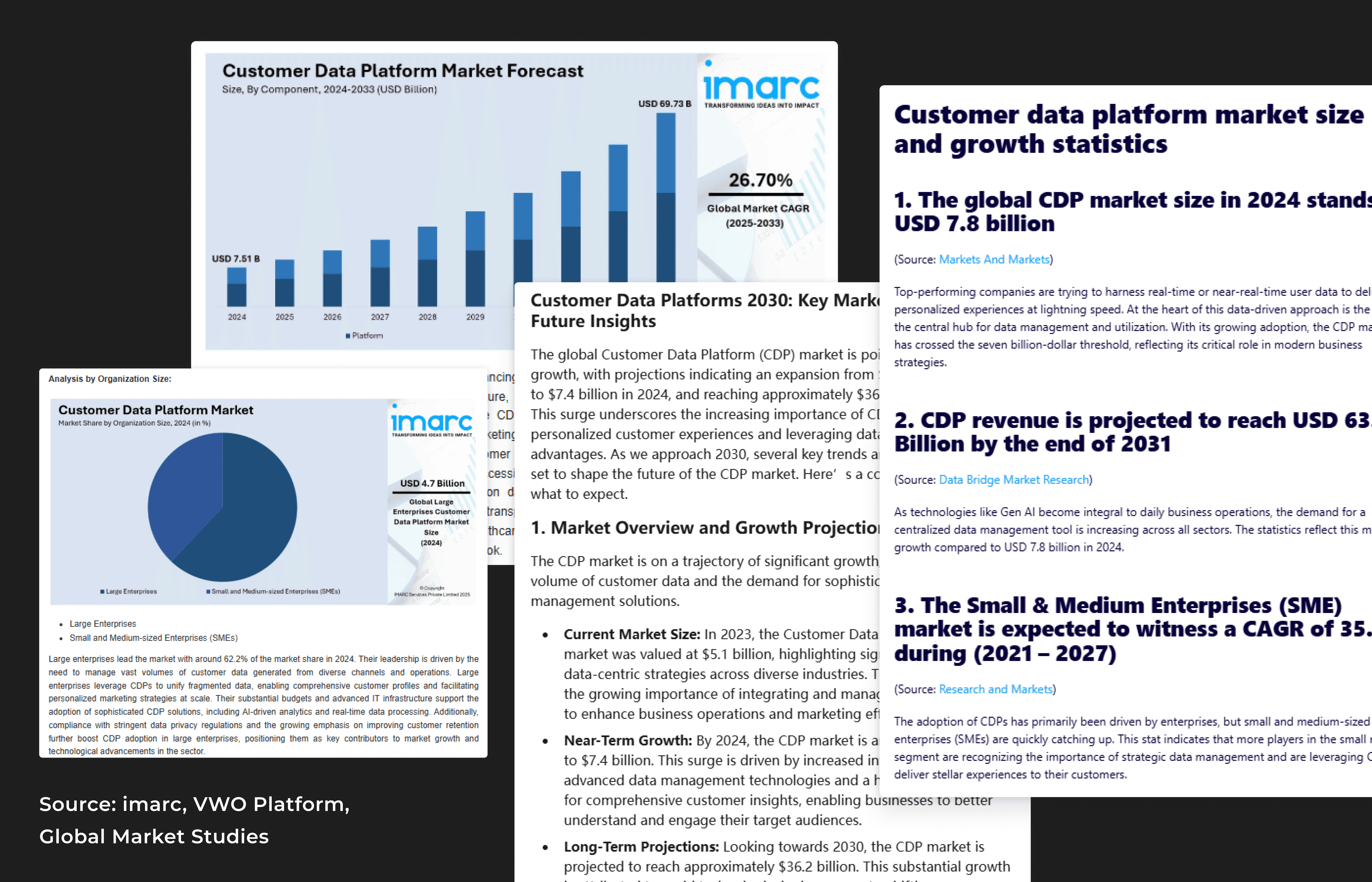
Businesses increasingly seek cross-platform data consolidation and real-time insights to support agile decision-making and timely marketing efforts.
02 | Growing Pressure for Precision Marketing
With rising advertising costs and performance expectations, companies urgently need data-driven segmentation and marketing automation tools.
03 | Fragmented Data
Customer information is scattered across various systems like POS, official websites, CRMs, and ad platforms, making integration difficult.
From Market Insights to Strategic Product Definition
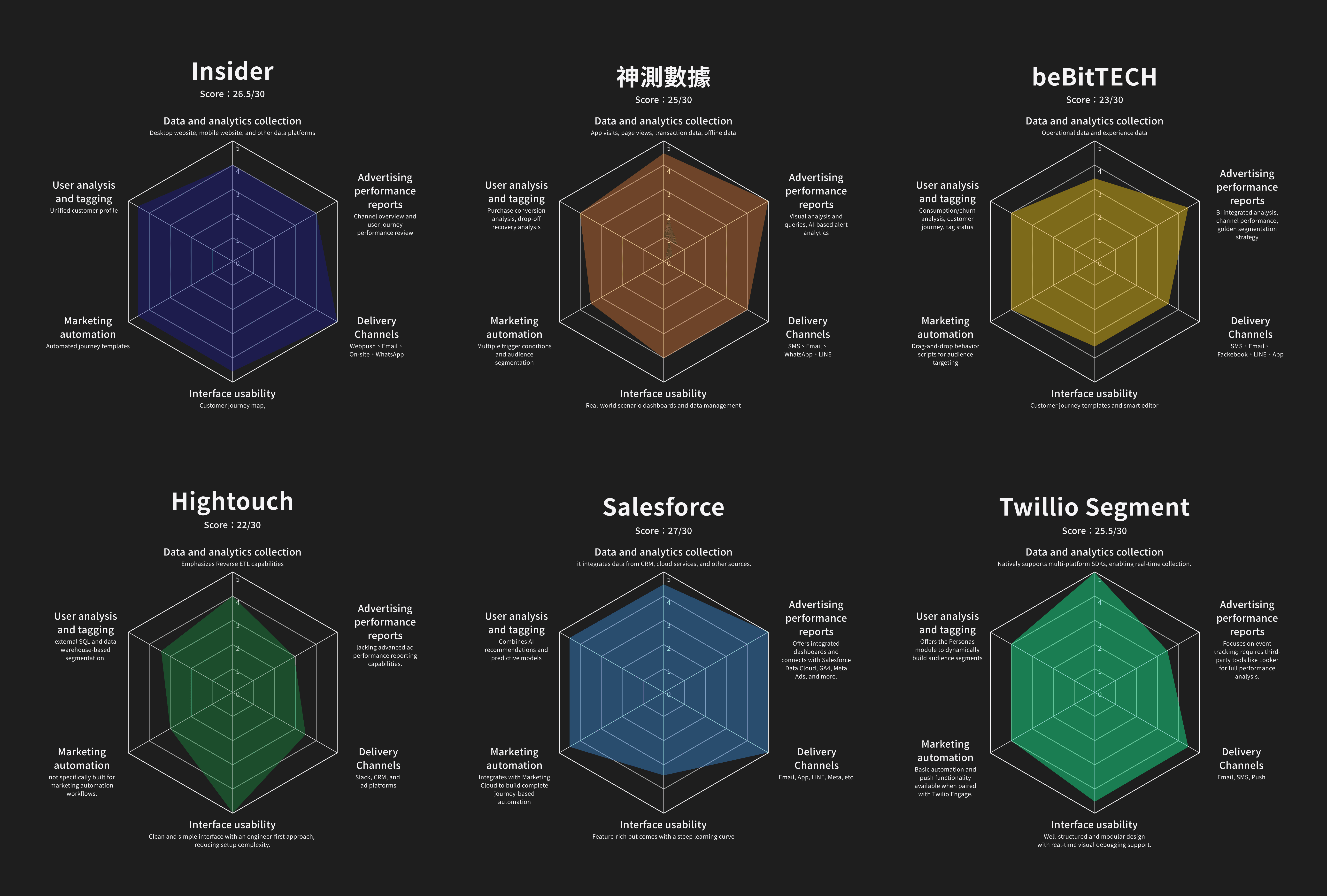
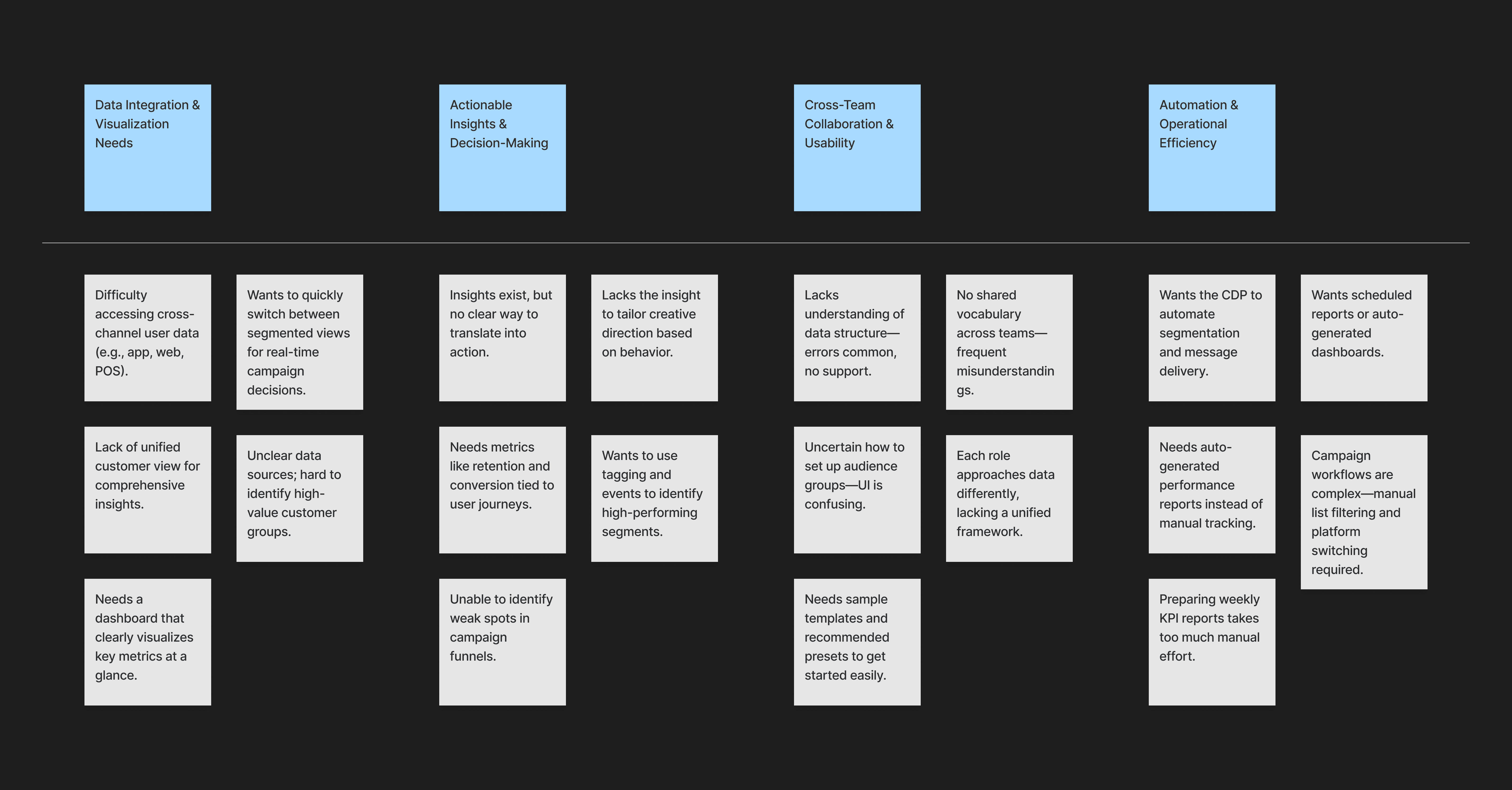
In the early design phase, we conducted three key research activities to clarify the core problems:
Define Problems
Based on our research, we identified three core pain points:
01 | High Data Integration Barrier
Marketing teams cannot independently handle data modeling and operations, relying heavily on engineering or data teams.
02 | Lack of Real-Time Insights
Data updates are delayed, making it difficult to respond promptly to customer behavior changes.
03 | Complex and Unfriendly Tools
Many enterprise CDP tools have overly complex interfaces, creating high entry barriers for small to mid-sized brands.

Built a data-driven capability from 0 to 1 and delivered the MVP WITHIN 6 MONTHS.
With a tight 6-month timeline to deliver the MVP, our challenge went beyond speed—we needed to balance technical complexity with user needs. To align the team and sharpen our focus, we used the HMW (How Might We) framework to reframe four key design challenges:
01
How Might We rapidly launch an MVP and validate real market needs within a limited timeframe?
02
How Might We unify fragmented data across channels, systems, and formats into a cohesive architecture?
03
How Might We ensure data encryption and privacy while enabling large-scale data exchange?
04
How Might We transform fragmented data into actionable insights through an intuitive interface for marketers and operators?
These questions guided our early design direction—helping the team stay user-centered while balancing feasibility and business value to focus on the most impactful features.
— Design Solution —
To help marketers and operations teams easily navigate complex data, we crafted a visual system focused on clarity, consistency, and approachability.

Our LCDP isn't just about collecting data—it's about unlocking its value.
In response to the four core HMW challenges, we designed a comprehensive and differentiated Customer Data Platform that addresses each critical aspect — from data integration and security, to user experience and marketing applications.
Rapid MVP Launch & Unified Data Integration
We prioritized the most critical needs by focusing on three key modules: Customer Insights, Tag Management, and Marketing Automation. This ensured a seamless data loop—from collection and analysis to activation. By integrating both OMO and member data across online and offline channels, we built a unified customer profile to power smarter engagement.
Insight & Analytics Module
Understand your customers through data—no more guesswork.
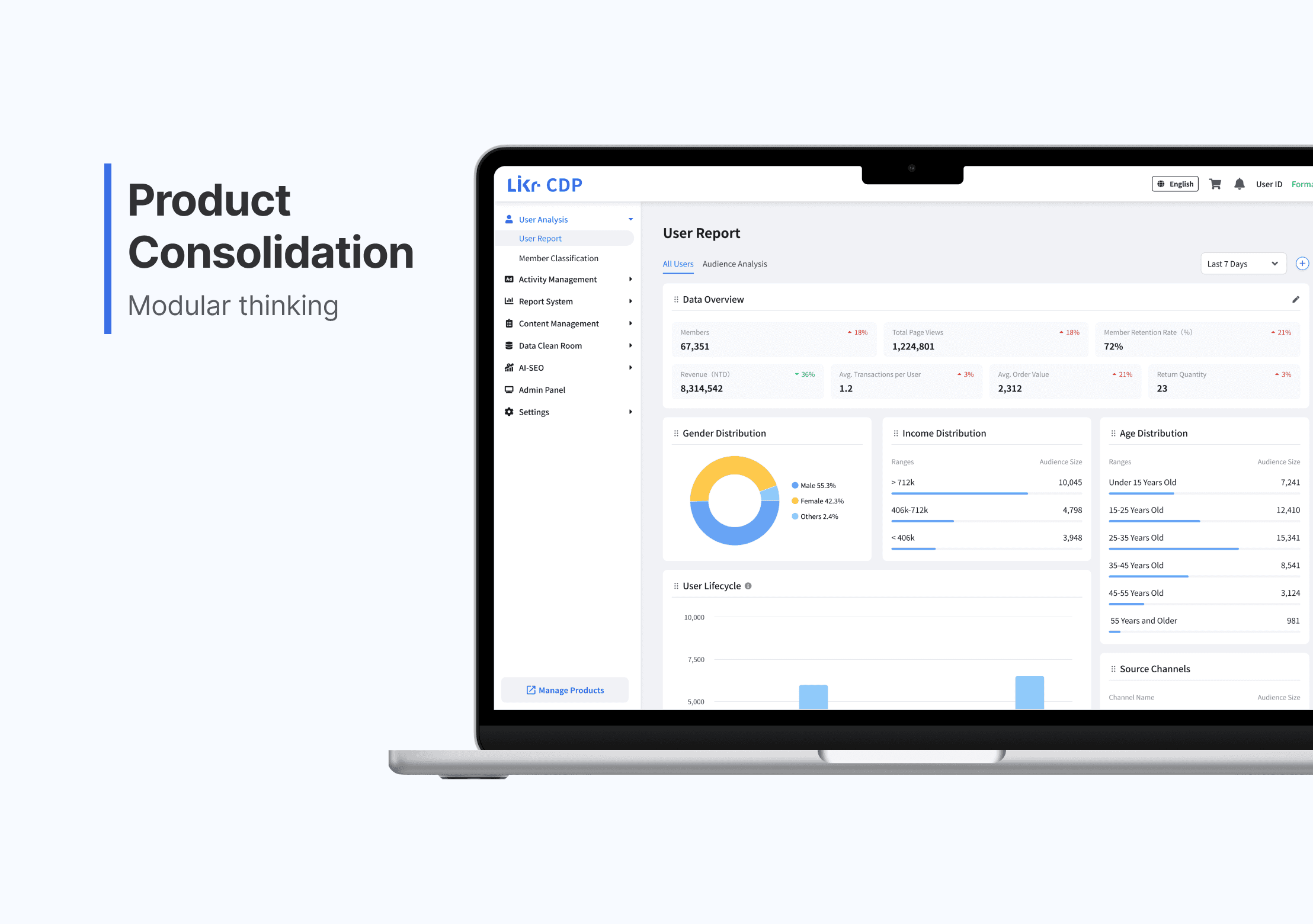
Our platform offers user profile analysis (gender, age, location, interests), multi-channel behavior tracking, and data visualization. With an intuitive audience management interface, marketers can tailor strategies to different targets and make truly data-driven decisions.
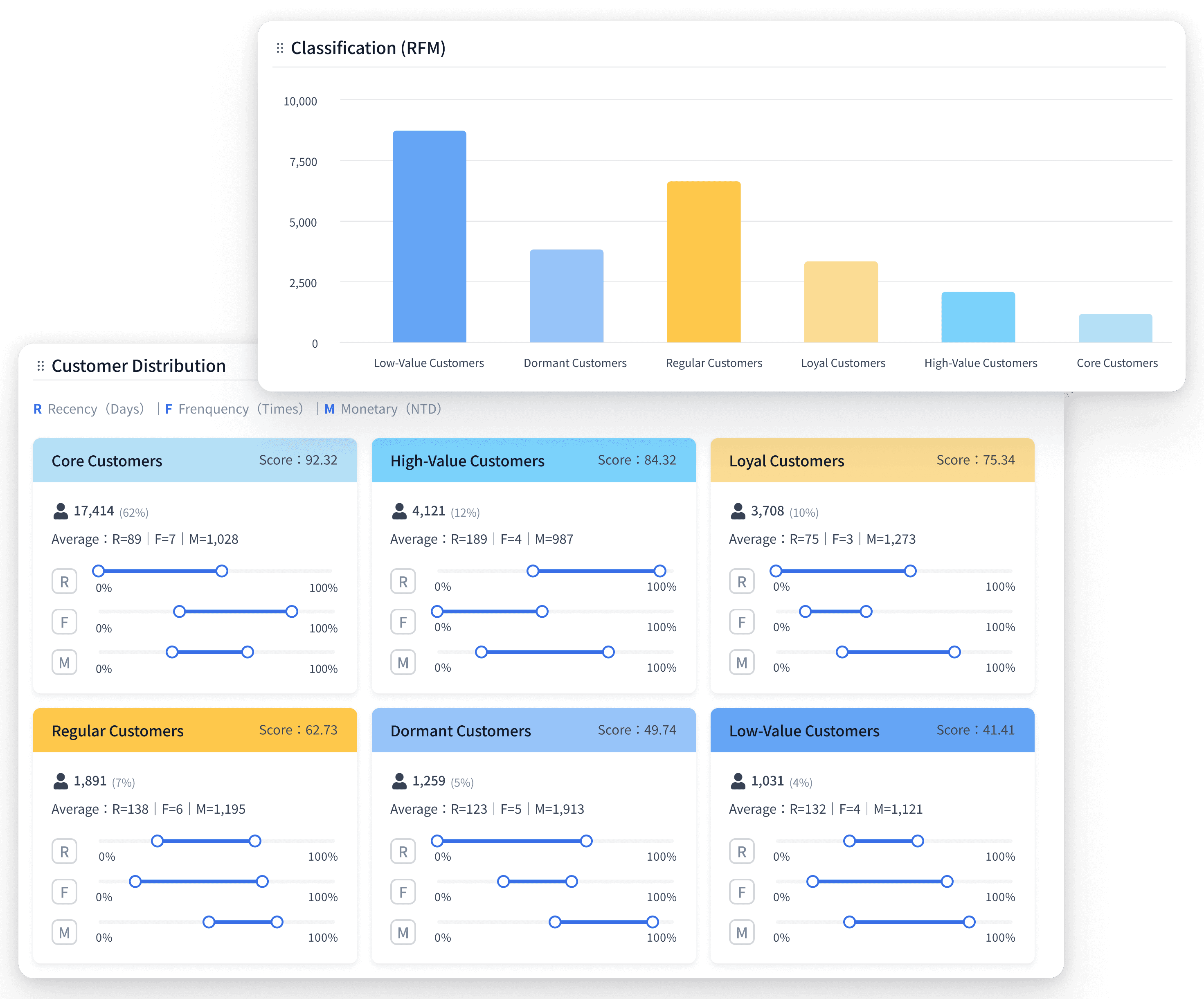
Quantifying Customer Value with RFM Segmentation
Our RFM module quantifies customer value and segments users through visualized analysis, helping brands identify:
Who are the loyal, high-value VIPs?
Which customers are at risk of churning?
Which segments hold potential for re-engagement and remarketing?
Results are automatically tagged back to user profiles, enabling marketers to quickly launch personalized campaigns and optimize resource allocation—making every message count.
Customer Tag Management
From fragmented data to structured segmentation for smarter targeting.
By integrating first- and third-party data, we built a flexible tagging system to map the full customer journey. With dynamic segments and tag management, marketers can easily identify high-potential audiences and deliver precise messages—boosting ad efficiency and campaign performance.
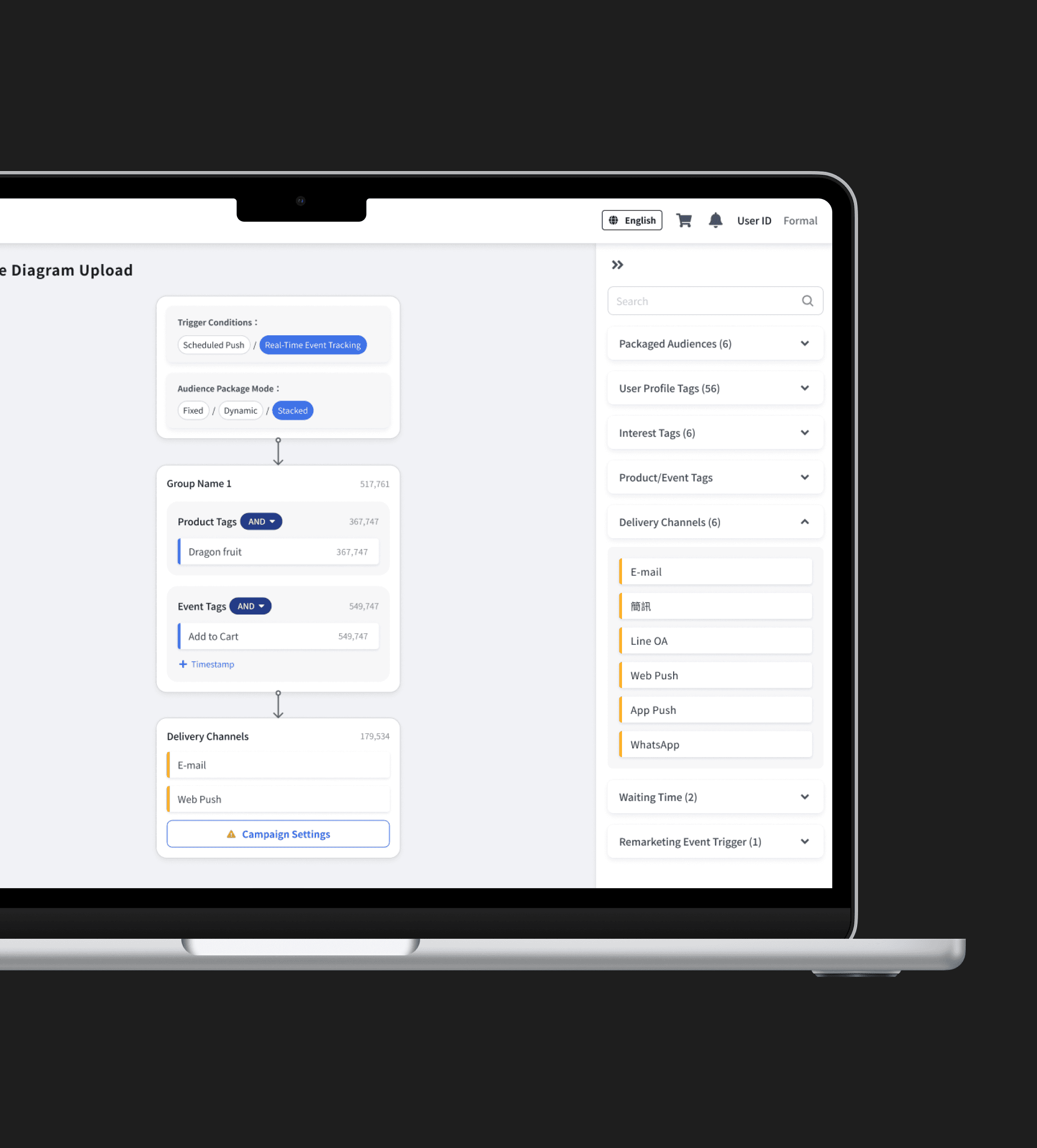
From tags to action: Build ready-to-go audience packs
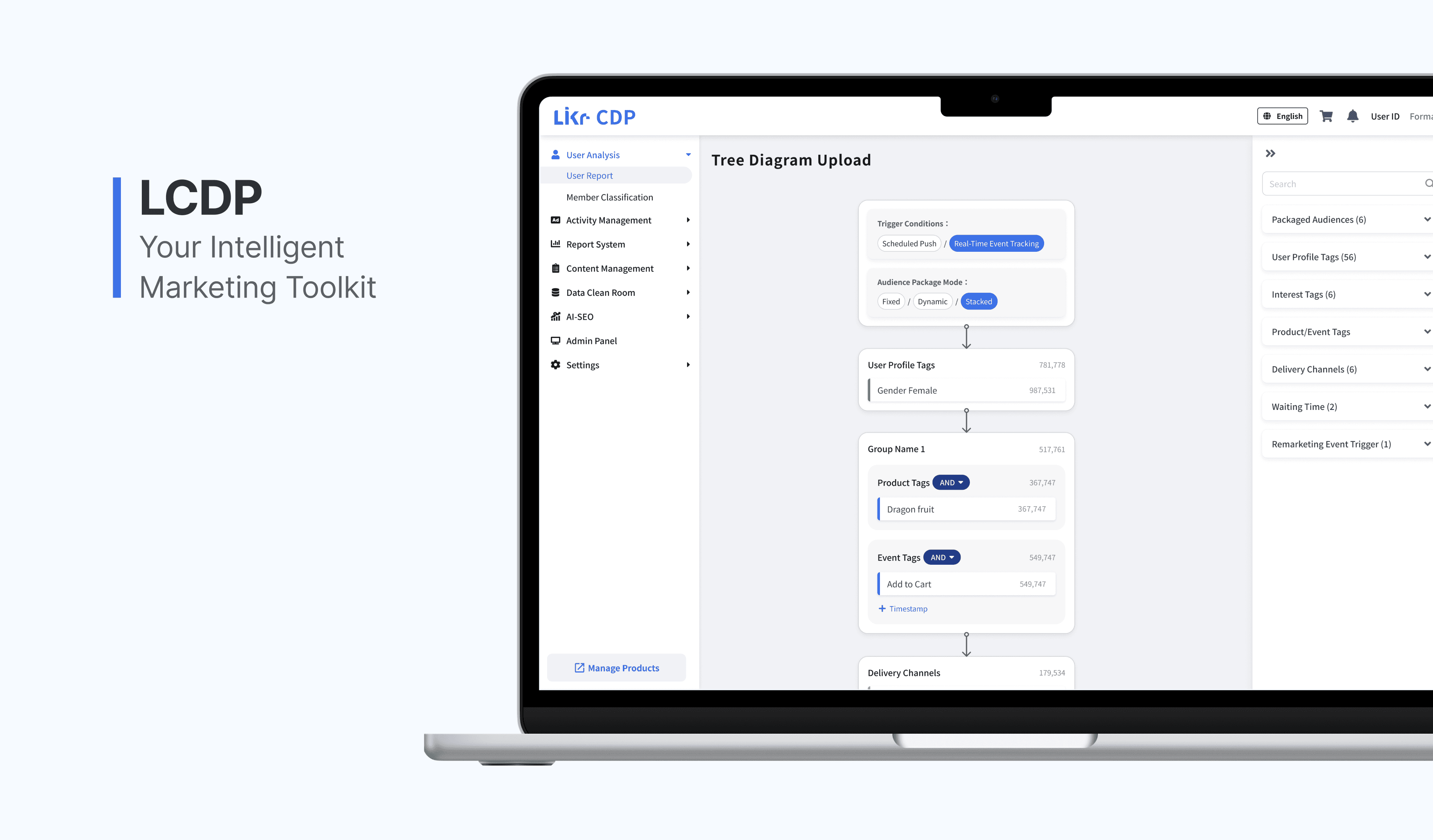
With tags flowing in from customer behaviors, RFM values, and engagement triggers, our system auto-packages segments into actionable audience groups. These dynamic packs allow marketers to instantly launch personalized campaigns across channels.
Marketing Automation
Turn data into action and drive real conversions.
Customize trigger conditions and marketing touchpoints to build automated customer journeys. Integrated with major push platforms, it enables true omnichannel marketing. Every campaign is trackable and optimizable in real time, supporting retargeting strategies to boost conversion rates and user engagement.
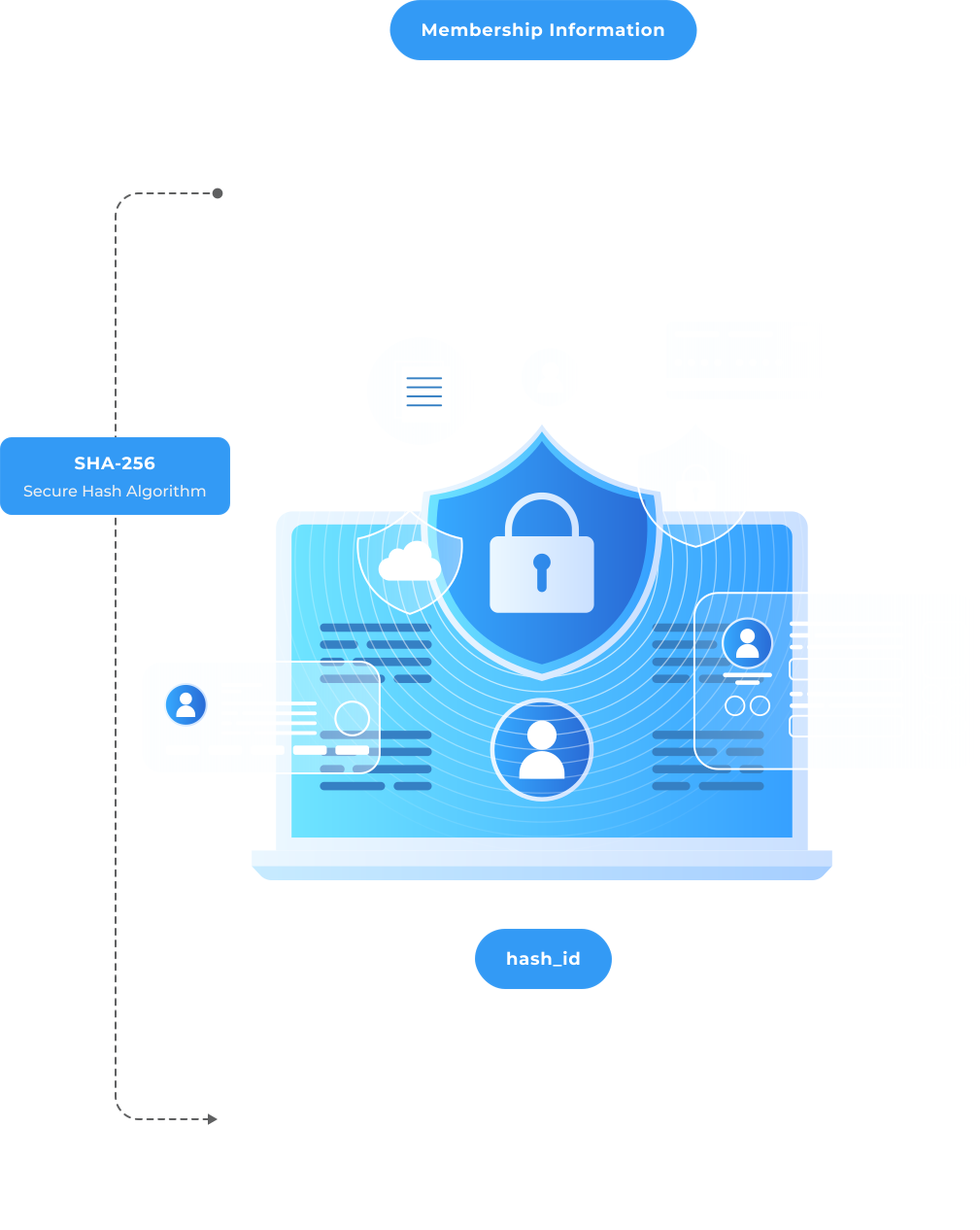
Secure Data Exchange
Turning off-site behavior into part of your first-party data.
We designed an encrypted data exchange module that enables brands to safely share consumer behavior data with partners—especially from off-site ad platforms—while staying privacy-compliant. This expands the first-party data scope and enhances conversion analysis and ad performance tracking.
Location-Based Marketing
Bringing data-driven marketing into the real world.
By incorporating location into marketing logic, we enable regional campaigns based on store visits, local preferences, and offline interactions. From national chains to neighborhood shops, brands can identify nearby active users, send targeted offers, and track offline conversion performance in real time.
— Outcomes & Impact —

Tangible Growth Through Data-Driven Marketing
Within approximately six months of adopting the CDP, our clients saw an 18.5% increase in total membership, with a monthly average growth rate of 3.1%, meeting target expectations. Future efforts will focus on improving retention and conversion rates.
Although client revenue fluctuated during normal periods, precision marketing and promotional campaigns helped boost revenue to 1.5 to 3 times the usual level during peak activity. Built-in performance tracking reports, retention analytics, and automated marketing templates significantly accelerated marketing decisions and execution, resulting in better conversion and revenue outcomes.
— Takeaway —

Comprehensive Product Thinking
Sharpened end-to-end design perspective — from market entry points and user flows to data architecture.

Cross-functional Collaboration
Aligned closely with engineering, business, and data teams to deliver results within tight timelines.
Time & Decision Management
Focused on core features and removed distractions to deliver the MVP on schedule.
With more resources and development time, we plan to iterate and enhance the platform along the following directions — aiming to elevate both user experience and intelligent capabilities.

AI Integration
Introducing smart recommendations, automated reports, and chatbots to help marketers gain deeper insights with less effort.

Seamless Experience
Strengthening module integration and data flow to ensure smoother, more connected user journeys.

User Onboarding
Optimizing guided interfaces with contextual tutorials and step-by-step prompts to lower the learning curve for non-technical users.